The School of Nursing, AHPs and Midwifery has developed dynamic, high-quality learning environments for students.
These innovative models of interdisciplinary clinical learning and teaching:
- improve the student's experience of learning in practice
- provide a unique learning environment
- enable attainment of competence and proficiency
- deliver high-quality supervision and clinical education
- provide pastoral care
- enable the team to grow professionally
What is Learner-led Education?
Learner-led Education is a setting where a group of multi-professional students take responsibility for actively organising and delivering care to a defined group of patients, supported by a practice supervisor.
This setting could be:
- a number of beds or bays on the ward/in side rooms
- a clinic or service
The area should have:
- a dedicated clinical educator
- close links with our approved education institutions (AEIs)
There is not a "one size fits all" model.
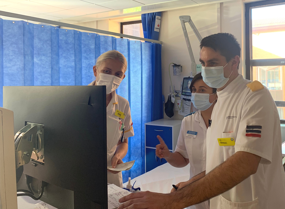
Why we need it?
- To attract and retain our nursing, allied health professional (AHP) and midwifery workforce
- To increase student placement capacity
- To help promote interdisciplinary learning and teaching
- To prepare students for their roles upon registration
- To improve student experience and satisfaction
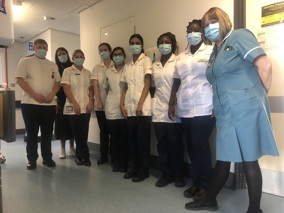
What it looks like?
This is an example of how a Learner-led environment has been be set up.
- A 12-bed student-led bay
- Four to six nursing/student nursing associate students on each shift, plus allied health professional (AHP) students
- One registered nurse on each shift, providing supervision to the students
- Healthcare assistants (HCAs) allocated to the bay, as usual
- Access to clinical educator support
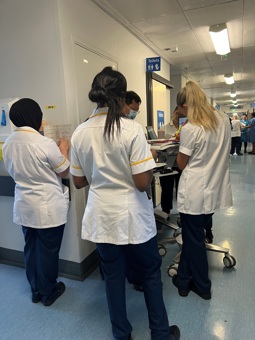
How it works?
Example processes for the learning environment:
- Students and supervisor take handover for patients in the Learner-led area
- A designated student is identified as being in charge of the area
- The students work together to assess, plan, deliver and evaluate the care needs of the group of patients (ward rounds, liaising with multidisciplinary team, handover etc)
The registered practitioner should step back, observe, ask encouraging questions, and provide feedback. Example questions include:
- What needs to be done?
- What do you need?
- What are the options?
- How will you do it?
- How do you feel?
The benefits
For students:
- Learn together
- Learn by doing
- Step forward and take responsibility for their own learning
- Build confidence and leadership skills
- Improve practice by gaining a better understanding of other roles
- Receive enhanced support and supervision
- Gain a sense of belonging and feel valued
- Achieve recognition for their contributions
- Preparation for transition into professional registration
For staff:
- Improved recruitment and retention
- Increased multidisciplinary team working/practice
- Job satisfaction and professional growth in role
- Time to supervise
- Shared learning and an enriched learning environment for all
- Collaboration with university partners
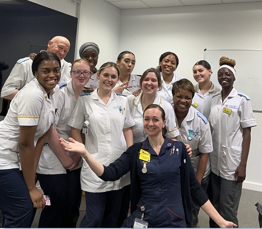
Considerations
There are many things to consider when setting up the student-led clinical learning environment.
- Student shift patterns
- Preparation requirements for the whole team:
- Team working
- Coaching
- Debriefing
- Student orientation and preparation
- Placement duration (five to six weeks) and flow of patients
- Expectations and partnership working with approved education institutions (AEIs)
- The role of the clinical educator
- Evaluation strategy
How we measure success?
Measurements of success include the following:
- Destination upon registration for students who'd been placed in a student-led clinical learning environment
- Attrition rates (how many staff stay vs how many leave)
- Placement pass rates
- Improved placement experience, measured via student evaluations
- National Education and Training Survey (NETS) completion rate and results
- Interdisciplinary learning and practices
- Student and team engagement levels and level of well-being
- Patient care metrics and key performance indicators (KPIs)
- Service user feedback
- Career progression rates
- National recognition

Opportunities
The establishment of Learner-led education offers many opportunities for the Trust.
- Grow and roll out environments across the Trust and within different clinical settings
- Increase teaching capacity and create ambassadors within these environments
- Work with partners across Birmingham and Solihull
- Build interdisciplinary practice and share education
- Undertake research to test different models
Sustainability
- Staff become ambassadors to showcase and share practice around the clinical learning environment
- Success measures become an integrated element within the ward accreditation programme
- Recognition of exemplar status
- Growth of a team's coaching skills, teaching capabilities and career progression
- Ability to offer education bursaries/scholarships and other opportunities, e.g.:
- participation in research
- writing articles
- rotation into education
- quality improvement projects
- Improved health, well-being and role satisfaction
Last reviewed: 16 November 2026